Adelaide
In which a young lawyer goes in search of a wealthy widow's possible heir.

Each time the woman passed by Dyson & Erikson Photographers, she slowed, stopped, and peered at the display. Three times her large, egret-plumed hat dimmed the glare on the window as she bent and examined the same photograph over and over. Horace Dyson wondered which of his works had caught her interest to such an extent, but speculation proved unnecessary; the tinkle of the door bell attested that the lady was entering his gallery
“Good afternoon, Madam,” he greeted her, deferentially. Her stole, silk dress and long, kid gloves testified she was one of the wealthier inhabitants of Durrand and Dyson knew such women expected respect.
“Do I have the pleasure of addressing Mr Dyson, or Mr Erikson?” the lady asked.
“I am Horace Dyson, Madam,” he answered. “Do you have an appointment, Mrs…?” He paused, giving her the opportunity to suggest a name. He was quite sure there was no studio appointment scheduled for this afternoon, but it was possible that the Erikson’s latest girl had forgotten to write one down.
“Mrs Martin Springer,” the lady responded. “I don’t have an appointment. I was wondering if one of the photographs in your window might be for sale?” The photos were only intended for display, but Dyson was willing to make an exception; if pleased by his work Mrs Springer might send her friends his way, or be persuaded to sit for a portrait, herself. That was worth the bother of reprinting an image.
“Which one interests you, Madam?” Dyson asked, going to the window and looking back towards her.
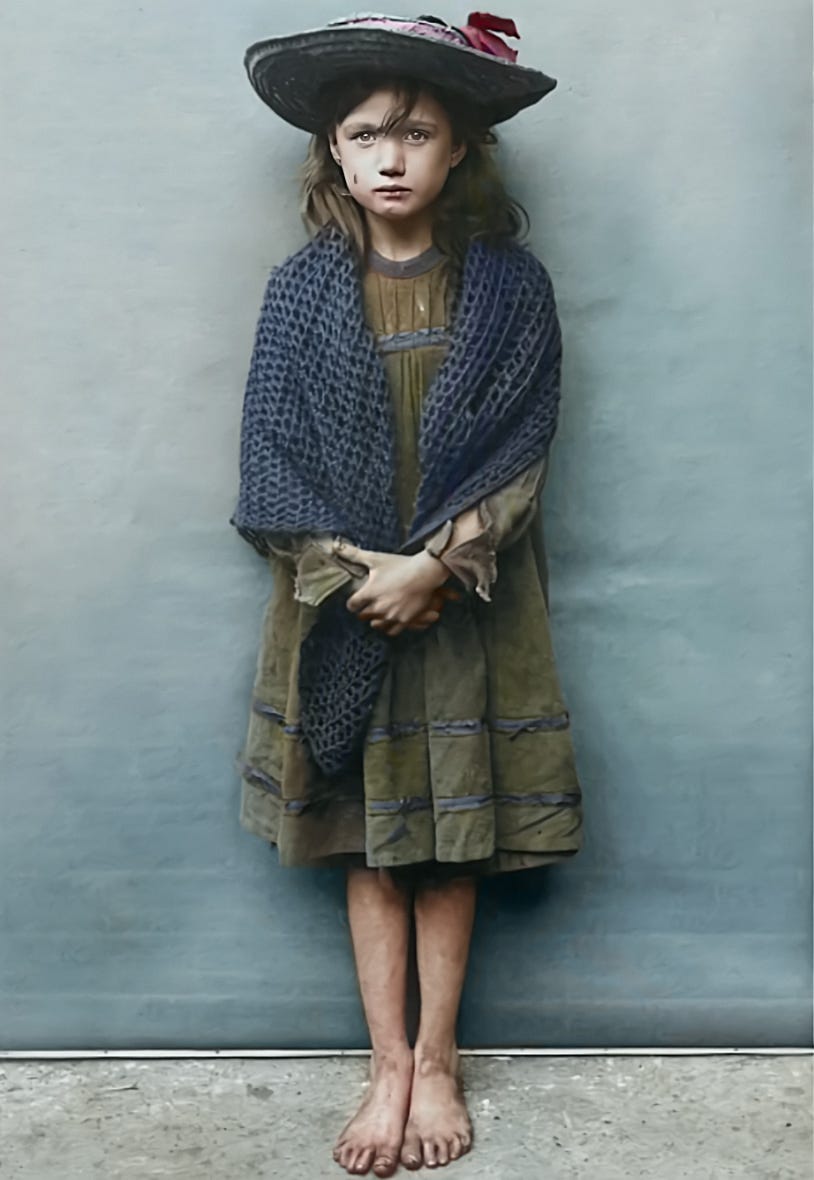
“The photo of the young girl, wearing a shawl, with her feet bare,” Mrs Springer answered. Her gloved finger brushed her lower lip as she lifted her hand, nervously. Dyson took the photograph from its easel, and looked at it as he brought it over to the woman.
He recalled watching the little urchin run quickly from one person to another to sell her posies, carefully choosing people who might have a few extra coins to spare. She’d thought he wanted to take her picture because it was her best dress, but it was her animation that caught his eye. Dyson smiled at the memory, and handed the picture over.
Mrs Springer eagerly took the photo from him; there was an intensity in her gaze. She poured over it as if searching. That would have made a wonderful photograph, all by itself, Dyson thought, but he’d never dare to suggest to Mrs Springer that she pose for a genre picture. Perhaps he’d get Erikson’s girl to pose but, no; that dull lump could never recreate the expression on Mrs Springer’s face.
“What can you tell me about this girl?” Mrs Springer asked.
“Oh, she was just a common, little waif I saw at the market,” Dyson said. “She was selling posies. I gave her 10¢ to pose for me. She insisted on taking off her shoes, though. She thought they were too old and worn for a photo.”
“Have you seen her often?” Mrs Springer asked.
“A few times,” Dyson said. “She’s there most Saturdays, I believe.”
“Do you know her name?” Mrs Springer asked. Her eyes implored him for an answer. Dyson was a little taken aback by her intensity.
“Addie, I think,” he replied. He found the city’s newsies, matchgirls, and the like, an entrancing subject and made a series of such photographs, but he paid the children little heed, otherwise.
“How much is it?” Mrs Springer asked. Dyson thought to himself that opportunity doesn’t knock twice. His partner, Charles Erikson, might deplore wasting materials on his ‘odd obsession with guttersnipes,’ but Mrs Springer’s interest was proof of Dyson’s instincts.
“Two dollars,” he answered, wondering if it might be too much. Mrs Springer set the photo carefully on the glass counter.
“I’ll take it,” she said, without hesitation. “And the frame.” She fished two silver dollars and a fifty-cent piece out of her reticule and set them on the counter while Dyson wrapped the picture up, first in tissue, and then a layer of paper for better protection. He slipped a business card into the package, hoping Mrs Springer might want to recommend the studio.
On leaving the photographer’s gallery, Adelaide Springer – Martin was her late husband – had hurried back to her house near the corner of Mountain Road and Arkeldun Avenue. As soon as she got inside, she carefully unwrapped the package, and set the picture on the table. She sat close beside it, for many minutes, not even removing her stole.
There was no doubt the girl in the photograph bore a strong resemblance to her son Martin Junior. Was it possible the girl was her grandchild? The thought brought tears, and it took her a while to compose herself; Florie, the maid, came and saw her and began to fuss. She took Mrs Springer’s stole and purse, and then hurried to brew some tea.
“She’s upset,” Florrie told Mrs Cooghan, the housekeeper. “I’ve never seen her that taken, not since the young master died.” The two servants wondered what might be the cause. Some called Mrs Springer ‘reserved,” although that was not entirely fair. The same men often dismissed women as emotional, so she took care no such judgement was made of her.
“Here you go, Ma’am,” Florrie said, bringing her employer a cup. “You have that and settle yourself.” Mrs Springer was looking hard at a silver framed picture that Florie had never seen before.
“Do you see it, Florie?” Mrs Springer asked as she took the picture over to the mantle, and set it beside a photo of her son, Martin
“See what Ma’am?” Florie asked, doubtfully. A good servant sees only what she’s expected to see.
“Take a good look,” Mrs Springer encouraged her. Florie looked from one photograph to the other to humour her employer. She wondered what the game was, and wished she and Mrs Cooghan hadn’t made so free with the sherry in her mistress’ absence. The girl, a common-looking little ragamuffin, in a tatty shawl and dress that had seen better days, barefoot and ill-washed, looked like any other 8 year old. It was then Florie noticed the girl’s eyes, gazing frankly at the camera, without any fear.
“Well, she does favour the young master, don’t she?” Florie wondered how she’d missed it. She took a second look. “Yes, I do think her eyes look like young Mr Martin.”
“I thought so too,” Mrs Springer said. “I glanced in the window quite by chance, and suddenly I saw my son’s eyes looking back at me from this girl’s face.” She picked the picture up and looked at it again, while Florie stood there, waiting.
“I must find out who she is,” Mrs Springer said. “I must know if there is any connection.” She dismissed Florie and sat with the photo in her hands, wondering.
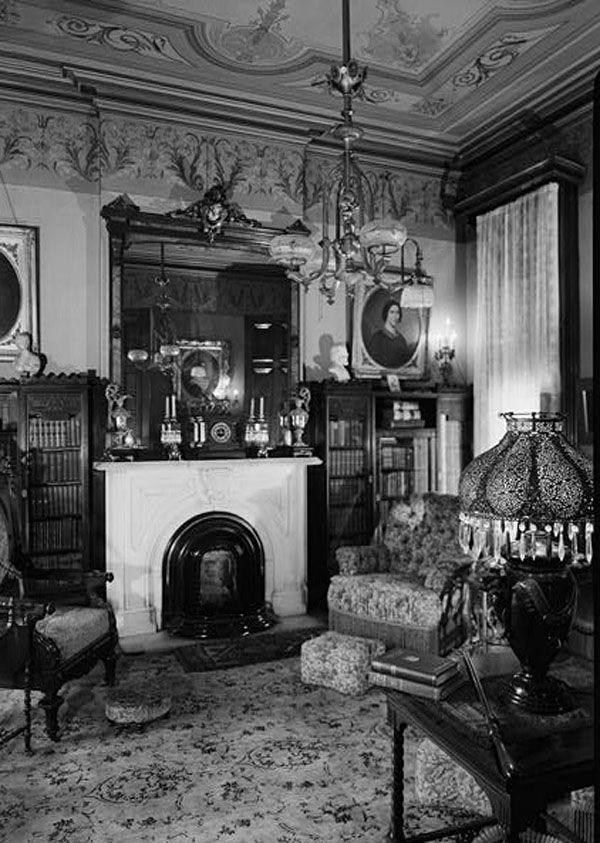
In the morning Mrs Springer went down to the offices of Abbot, Peters, and Jarvis, who had provided her with legal advice ever since her husband had died. The clerks knew better than to keep a lady of means waiting, and she was soon ushered into the wood panelled office of Mr Jarvis. She showed him the photo and told him the story.
“You think,” Mr Jarvis said, “That your late son might have – please excuse the indelicacy – fathered this girl before his unfortunate accident?”
‘She looks to be precisely the age one would expect if he’d had a child before he returned to Durrand from school in Tutonguay,” Mrs Springer said. “And the resemblance is strong.”
“Well…” Mr Jarvis began, stroking his whiskers as he often did when trying to dissuade a client from a course he thought foolish.
“Don’t try and persuade me to drop this, Jubal,” Mrs Springer said. “I simply must know. How hard can it be to find out?”
“But Adelaide,” Mr Jarvis said. “A resemblance might be explained any number of ways. And these inquiries might leave you open to all sorts of bounders and charlatans, who’ll tell you any lie to get hold of some of your fortune.”
“That’s why I propose to ask you to look into this for me, Jubal,” Mrs Springer replied. “I’m sure one of your clerks knows how to be discrete about such matters; you’ve handled enough divorcements, I know for a fact.” Mr Jarvis blew out his cheeks and slowly let the breath escape through his pursed lips before he acknowledged that they’d handled matters that did require confidentially.
“Yes, that’s true,” Mr Jarvis said, reluctantly.
“Perhaps it might be better if it was one of your juniors,” Mrs Springer suggested, after a moment’s reflection. “They have a duty to keep matters quiet, don’t they?” Mr Jarvis was going to say that attorney-client privilege usually only pertained to matters at trial, but he decided against it.
“Supposing she does prove to be your granddaughter,” Mr Jarvis said, “What then?”
“Well, I’ll see her educated, at the very least,” Mrs Springer replied. “I won’t have my own blood scurrying barefoot around the market square selling posies, Jubal. She’ll be brought up a young lady.” Mr Jarvis took another look at the picture; it was hard to tell if the minx would be amenable to an education befitting a young lady, but he thought it best not to say so.
“I suppose we might look into it for you, Adelaide,” he said, after some thought. “But you must let me guide you on this matter. If I don’t think there’s enough to go on, you must agree to let the matter drop.” Mrs Springer nodded, but not without a certain reluctance.
Matters of costs and reimbursement were quickly settled, and Mrs Springer departed in hope that the matter would be resolved within a few days. Mr Jarvis was far from certain; he knew the poor often moved on, quickly, from one town to another in search of better chances. There was a good possibility that the girl and her mother might have left without a trace.
Still, he had promised Mrs Springer to look into the matter and he asked one of the office’s messenger boys to tell Cunningham Harker that he wished to see him. “If he’s not in the office, then go and look in the law library,” he told the boy. “He’s always there with his nose in some book or other.”
Within half-an-hour, Cunnigham Harker knocked on the door, and Mr Jarvis bade him come in. He quickly explained matters to the young lawyer.
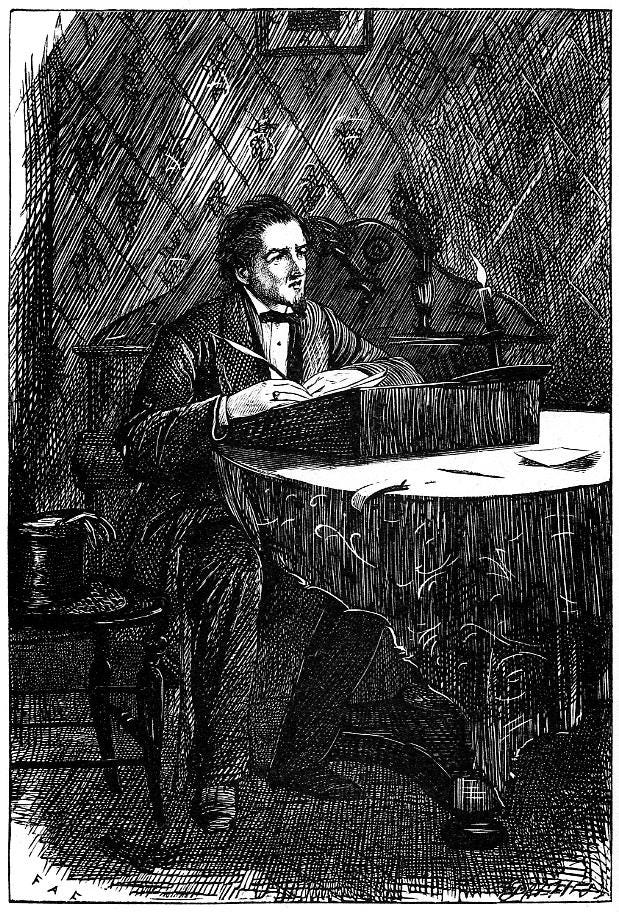
“I told Mrs Springer that you’d be handling this case,” Mr Jarvis told Cunningham Harker. “I needn’t tell you it’s a delicate matter, so your discretion is essential.”
“Of course, Mr Jarvis” Harker replied. “But are you sure I’m the best person for this? Surely one of the clerks…”
“One of the clerks will not do, Mr Harker,” Mr Jarvis replied. “Mrs Springer was quite insistent. I know you’ve been doing important research but, although this matter probably represents just a small billable, it holds within it the prospect of billings yet to come.”
“I’m not sure I understand,” Harker replied.
“Mrs Springer is in sole possession of a large collection of investments and properties,” Mr Jarvis said. “Not the largest in Durrand, by any means, but not inconsiderable. She has no heirs, to speak of, since her husband and son are both deceased. As her will stands, other than some charitable bequests, and some small sums left to her staff, there is no residual legatee.”
“Well, even so…”
“Think, Harker. Think!” Mr Jarvis said. “If Mrs Springer locates this girl and the girl proves to be her granddaughter, then the girl will be her heir. It’s unlikely the girl’s mother, some tart who bore a child out of wedlock, is informed about investments, mortgages and the rest. Should anything happen to Mrs Springer — God forbid — then our firm is likely to be retained as trustees and conservators for the girl until she reaches 25. Even then the girl will need our advice and counsel until she’s married.” He leaned back in his chair, and dismissed his junior; he was confident in Harker’s abilities to get to the bottom of the matter.
Cunningham Harker visited the photographer’s gallery straight away, to obtain a copy of the photo.
“I’d like to obtain a photo you had in the window: a young girl, barefoot?”
“Yes, sir,” Dyson was intrigued that twice in as many days the photo had brought someone into the gallery. “I could have one printed up by the morning.”
“Would it be possible to do it straight away?” Harker asked, bringing out his wallet. Three dollars secured Dyson’s agreement to print it forthwith. Once the photo was secured, Harker continued on his way to the market.
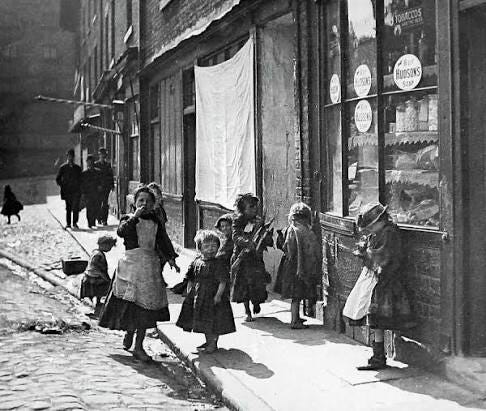
Not being in the habit of doing the shopping, Harker had forgotten Thursday was a market day. He was not prepared for the crowds that thronged the square behind City Hall. The cooks and housekeepers he expected, of course, but it seemed every housewife, spinster, elder daughter, cook and bottlewasher in Durrand had joined them. Women of all orders bumped and bustled Harker aside, left and right, as they sought out their bargains.
From time to time he approached stall-keepers and, when they had a moment, he showed them the girl’s picture and besought any intelligence they might provide. He quickly discovered that 25¢ or 50¢ predisposed even the busiest and most truculent butcher, costermonger, purveyor of fish and game, or baker to tell him what they knew.
Most, of course, knew nothing. Some recognized her face and, indeed, recalled that she had sold posies in and out of the market stalls.
“When did you see her last?” Harker repeated the question, over and over.
“Not in a while,” said some. Others thought it was a matter of a few weeks, or a month. But by mid-day he had at last determined that no one had seen the girl in three or four months.
“Oh, that’s Addie, that is,” a woman told him a bit before one in the afternoon. “She’s that Delia’s girl.”
“Where might I find this Delia,” Harker asked, realising he now knew the names of both mother and daughter. The woman thought, her lips pursed and one hand on her hip.
“I’ve not seen neither of ’em this Spring,” she told him, confirming what others had said. “Delia swept up in the covered gallery. You might ask old Joe about her.”
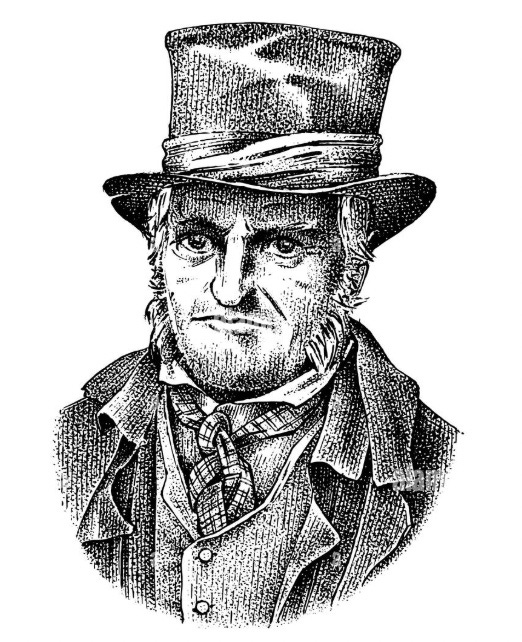
“Old Joe?” Harker asked, but the woman had already returned to her business, and he hesitated to distract her. Fortunately Old Joe was well known; he was the custodian of the market, and directions to his office were readily obtained. Harker found the man with his feet up on a broken-down desk in a room at the back of the covered gallery. He showed him the photo.
“Why that’s little Addie,” he said, fondly. “She ain’t in no trouble, I hope?”
“No trouble at all,” Harker replied. “I’m just trying to find her for a client.” The man sat upright and a look of concern appeared on his face.
“She’s a good girl, Addie. She don’t do nothing bad,” Old Joe said. Harker realised the man had misunderstood his intent, and blushed with embarrassment.
“My client, a lady, simply wants to offer her a scholarship,” he said. It was a slight deception, but Harker thought it best to keep Mrs Springer’s intent vague. Old Joe rubbed his poorly shaved chin and thought for a moment, while regarding Harker with a rheumy eye.
“Scholarship? Well I suppose that’s different,” he said. “But I can’t help you.”
“Oh come, my good man!” Harker said. “I can assure you of my bona fides! Here’s my card. I simply must find this girl and her mother.”
“Well, you see Mr…” Old Joe peered at the card, feigning that he could not see clearly, while holding it upside down.
“Harker,” the lawyer suggested, guessing the man was illiterate.
“Ah! That’s it…Mr Harker,” Old Joe said. “The thing is I can’t rightly say where either of them is.” Harker felt in the pocket of his waistcoat for another 50¢ piece. Old Joe saw and gave him a look that made it clear he was insulted by the implication.
“Are they relatives of yours?” Harker asked, puzzled by the reaction.
“Nothin’ like that,” the man replied. “Never seen Delia before she turned up here about seven years past. Addie was just a baby, then.” Harker nodded; he waited for Old Joe to continue his story, paying attention to the facts.
“Delia said that Addie’s father was a young gentleman from here in Durrand. They’d been sweet back in Tutonguay and, well… things happen, don’t they?” Harker nodded. “The young man come back here after he finished school, but before Delia found out she was in a family way.”
“Did she find the young man?” Harker asked.
“She told me he’d had an accident,” Old Joe said, shaking his head sadly. “Killed dead, he was. She needed a job to provide for them both. I suppose it might all have been a story for my benefit, but I’m a soft-hearted sort, and I believed her.” Harker wondered if he should tell the custodian that his story fit with what he knew of the circumstances, but decided against inviting Old Joe’s inevitable questions.
“Why didn’t Delia approach the young man’s family?” Harker asked. “Surely they’d have provided for the child, at least?”
“The very thing I asked her, sir!” Old Joe said. “She said it would be a shame to ask them, what with their recent loss and all. If the young man never mentioned nothing about her, then it might give his mother a nasty shock. Delia said she couldn’t do that.”
Harker was impressed by the girl’s discretion and finer sentiments; it’s not what he’d have expected from a student’s fancy.
“Well, if you won’t tell me where I might find them, perhaps you could pass on a message for me?” Harker suggested. Old Joe’s face took on a strange expression.
“See, sir, that would be a problem, on account of her being dead,” Old Joe told him.
Although Old Joe wasn’t sure, he thought that Harker might be advised to try the Home of the Friendless on Amisfield Street. Delia had developed pneumonia and died at St Bernadine’s and it was likely that the nuns there would have arranged for Addie to be taken to the orphanage, afterwards. The Home of the Friendless wasn’t far from where Harker lived on Gertrude Street, so he went to the law offices to inform Mr Jarvis of his findings; he could stop at the orphanage on the way home.
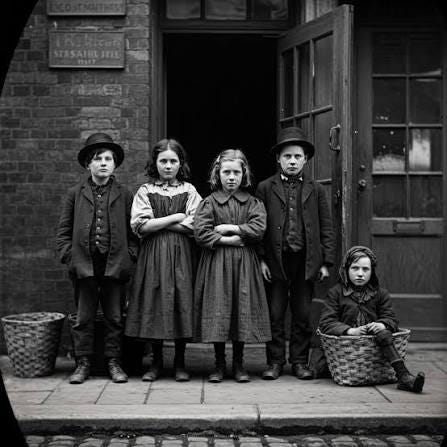
The building was on the corner. Red-brick and three stories tall, it had two wings. The older girls slept in a dormitory on the third floor, facing Amisfield Street on the south-west wing of the building. Sister St Felicity, who was in charge of the female orphans, brought the girl to see him.
“This is Mr Harker, Addie,” Sister St Felicity said. “He’s a lawyer and would like to ask you some questions.” Addie gave Harker a sideways look; at eight years of age, she’d heard of lawyers, of course, but she hadn’t heard much good about them. In her uniform of a white blouse and navy blue pinafore, she looked cleaner and less scruffy than the photograph. She was wearing simple black shoes, scuffed as one might expect with a young girl, but clean and in reasonable condition. Still, the peculiar dignity the photographer had captured in the image seemed dimmed in the orphanage, Harker thought.
“Do you remember Mr Dyson taking your picture, Addie?” Harker asked.
“Yes Sir,” Addie said, looking at her image. “He given me a whole 10¢ for it,” Addie replied.
“Grammar!” Sister St Felicity interjected, quietly.
“He gave me,” Addie said, carefully. “I don’t got to give it back, do I?” The nun rolled her eyes and let the grammar pass.
“Oh, no!” Harker said. “Not at all.” She looked a little relieved.
“That’s good, ‘cuz i dont got it,” Addie said. Sister St Felicity tsked with disapproval and Addie corrected herself. “I don’t have it any more.” she enunciated the ‘have’ in an exaggerated way. Harker found himself amused; what she lacked in refinement the girl still made up for in spirit. He thought that the nun must have her hands full, if the other girls were anything like Addie.
“Tell me, Addie, what was your mother’s name?”
“Delia Drouin,” Addie responded without hesitation; she gave the name a French-Canadien pronunciation.
“And where did the two of you come from? You weren’t born here, were you?” Harker asked
“No, Sir,” Addie replied. “I was born in Tutonguay. Mamma brought me here when I was a baby, though, so I don’t remember it at all.”
“And your father?” The girl gave him an uncomfortable look and shook her head.
“I never met him,” Addie replied. “Mamma said he came from Durrand; that’s why we come here. But he was dead when we arrived.” Harker let nothing show on his face, but that fit with what he knew of Martin Springer Jr. The young man had died in an ice-boating mishap not long after returning to Durrand from university.
“Was his name Drouin?” Harker asked.
“No sir. Drouin is Mamma’s name, ” Addie replied. “Mamma wouldn’t say what my father’s name was.” She looked at the floor, clearly embarrassed by her illegitimacy. Harker nodded.
“Thank you, young lady,” he said; fishing a 5¢ piece from his pocket he gave it to her. “You were very helpful and I won’t keep you any longer.”
“Thank you,” Addie said. She gave a small curtsey and Sister St Felicity showed her out. Just as she reached the door, she turned back
“Mamma did say I was named after my grandmother,” she said. “My father’s mother: Adelaide.” Harker nodded, then waited for the door to close before he spoke again.
“Tell me, what becomes of the children here?” he asked. He hadn’t been in Durrand long, and the Home of the Friendless was unknown to him, though he’d walked past it several times. He felt something of a fool for never having spared a thought for orphans before. Sister walked over and sat behind a desk, she looked at him directly, her face framed by the wimple.
“We do our best. We try to get the boys apprenticed, most of them. We prefer to keep them in town if possible; farmers are always looking for boys, but they work them very hard, and don’t really provide well. At least as apprentices there’s an indenture their master is supposed to keep to.”
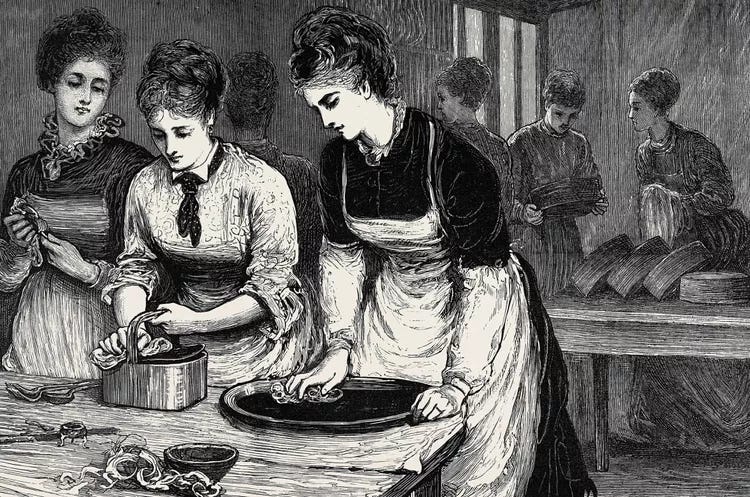
“And the girls?”
“Most go into service,” Sister St Felicity said. “Again, we prefer to keep them in town. All sorts of things seem to happen in the country. At least in town we can ensure the homes they go to are reputable.” Harker listened carefully; the childrens’ futures seemed rather hopeless.
“So all the children are gone by the time they’re 13?”
“Usually, yes,” Sister St Felicity replied. “Some people want scullery maids as young as 11, but we try to discourage it.”
“Do you know anything more about Addie’s mother or family?” he asked. Harker’s expectations were low, but the nun got up and went to a file-cabinet and pulled out a file.
“Very little more,” she replied. “The nuns at St Bernadine’s tried to get her story, but it wasn’t long before she got too ill to speak. She was an orphan herself, who’d been in service in Tutonguay. We wrote to our sister house there, and they confirmed a few details.”
“May I ask what they were?”
“Well, in confidence, of course,” Sister St Felicity said. “Adelia Drouin went from our sister house to the home of the Armstrongs of Monteregian. It was there her name was shortened to Delia; the Armstrongs didn’t want her to give herself airs.” Calling a female servant by some diminutive was not uncommon; sometimes they were given entirely new names by their employers. Harker recognized the family’s name; Elliot Armstrong was a prominent man in law and politics. He noted it down.
“I wrote, to ask if Addie might be related to the Armstrongs,” Sister St Felicity confided. “I put the question as delicately as I could, of course; they might not want to acknowledge her if she was, but they might, perhaps, send some funds for her future.”
“Did you receive a reply?”
“I heard back from Mrs Armstrong. She said that Delia had been carrying on with a frequent guest of her son, Charles. Both young men were studying at the university. Mrs Armstrong wrote that Delia insisted that the child wasn’t fathered by any of the Armstrong men.” She looked doubtful at this.
“Did Mrs Amrstrong, by any chance, name the young man?” Harker asked.
“No,” Sister St Felicity replied. “I did think to write again, to ask, but her first reply indicated that further correspondence would be refused.” Harker closed his portfolio and drummed his fingers on the desk in thought.
“Well, thank you for your time and help,” he said, after a moment. He picked up his hat and was about to leave when he thought better of it. He pulled out his wallet and found a five dollar bill; he set it on the desk. “For the children.”
In the morning, Harker wrote to MacBhrath College, to inquire if the dean might send a list of the students who were in Charles Armstrong’s year at the school. While he waited on the reply he pursued other, less promising, lines of inquiry.
The answer came back within a few days. It turned out that Martin Springer’s name was among Charles Armstrong’s classmates at MacBhrath. Harker took all the information he had gathered to Mr Jarvis.
“It’s not a lot, is it?” Mr Jarvis said, his thumbs tucked into his waistcoat pockets, and his fingers resting on his expansive form.
“As much as we are likely to find out, here,” Harker told him. “The police have no report of Adelia or Delia Drouin, and nothing at all about the child. It seems that, as Old Joe reported, she went to work for him as soon as she found out that Martin Springer Jr was deceased.” Mr Jarvis leaned back in his chair and looked up at the ceiling, thinking.
“What do you make of that, Harker?” he asked. “Dropping the matter isn’t what you’d expect from one of these soiled doves, is it?”
“I can’t say I have much experience in the matter, Mr Jarvis,” Harker replied. “But I was impressed by her restraint. If she was simply looking for money, it strikes me she’d have approached the Springers directly, whether their son was dead or not.” Mr Jarvis nodded, slowly.
“Did you try to track down her effects?” Jarvis knew letters or other keepsakes might do much to fill in the gaps in their knowledge.
“I went to the address Old Joe gave me,” Harker replied, “But the new tenant knew nothing. He said there was nothing in the place when he took the room; the landlord had thrown everything out except the bed and a chair.” He couldn’t help but wonder what bits of things the mother and child had cherished that had been consigned to the rubbish without a second thought.
“Not much…not much,” Mr Jarvis said, again. “Just the resemblance in the eyes – which might be simply the imagination of a lonely widow – and bare circumstances that are suggestive, but hardly conclusive.”
“There’s the name, too, I suppose,” Harker added.
“Yes, there is the name,” Mr Jarvis said. “That’s curious. Again, it might just be a coincidence. Still, Mrs Springer was insistent that we look into things and make a report, and we have done so. I wish there was more.”
“I suppose I might go to Tutonguay and speak to Charles Armstong,” Harker suggested. “But that would mean absenting myself from my work here for 3 or 4 days, and added expense.”
“Quite so,” Mr Jarvis replied. He thought for a moment, then continued, “Still, it might fill in the gaps in the story. I think you had better go. Mrs Springer said she’d cover reasonable costs, and this strikes me as quite reasonable. Go and make arrangements.” Harker went down to the Great Eastern Railway station to buy his ticket for the morning train. Then he headed toward Gertrude Street to tell Lucy he had to go out of town for a few days. At the corner the newsboys were loudly announcing the success of the first telephone call from Durrand to Governor’s Landing. In the ruckus, he almost missed the voice calling his name.
“Mr Harker! Mr Harker Sir!!” It was Old Joe, looking a bit red-faced and out of breath. “Oh, you led me a chase Sir, and no mistake. I went to your office, but they told me you’d gone down to the station. I was worried I might miss you entirely.” He blinked as if his rheumy eyes were unaccustomed to the bright daylight.
“How can I help you?” Harker asked.
“I wanted to give you this, sir” Old Joe said. “I quite forgot I had it.” He pulled a photo from his jacket pocket. The corners were a bit dog-eared and there was an unfortunate fold across the paper, but the face was clear enough. It was a young woman who bore a close resemblance to Addie.
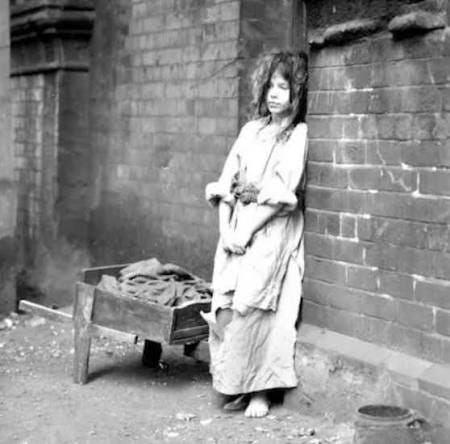
“That’s Delia,” Old Joe said. “I quite forgot about that picture. That Mr Dyson took it, not long after she come to Durrand. I forgot I bought a copy, but there was something about it.” Harker looked at the photo carefully; it showed a girl of no more than 18, leaning on her broom. Obviously she had been in the midst of her work when Dyson had seen her and decided to capture her image. There was something picturesque about it, and Harker could see both why Dyson took the image, and why Old Joe had been moved to buy it.
“Might I have this?” Harker asked. “Borrow it. I’ll return it to you when I’m done my inquiries, but it might be very useful.” He found a silver dollar in his pocket and offered it to Old Joe.
“Will that help little Addie?” the man asked.
“It might,” Harker answered. Old Joe looked off, down the street, as if trying to remember something.
“In that case, you keep your money,” he said. “You do right by her, poor mite. She needs someone to look out for her.”
“I’ll send or bring the picture back to you when I’m done,” Harker said. Old Joe shook him by the hand, and looked up into his face before leaving. Both men blinked, but it was probably just the bright, May sun.
The next morning, the train took Harker from the Great Eastern Railway station on Minnie Street to York. At the Union Station, he transferred to an express that took him all the way to Tutonguay, a trip of six or seven hours. He arrived at Bonaventure Station around 3:00 p.m. and found a hotel. He was restless from the trip and decided to put off the cab-ride across Tutonguay to the suburb of Monteregian, as the streets looked very crowded. Instead, he decided to look around, and then eat, before turning in early. On a whim, he decided to go to the library of the Law Society.
In the lobby, as he was approaching the front desk to ask the way, he heard someone call the name “Armstrong.” Harker turned and watched as two men exchanged a few words. When the man who had hailed the other started to leave, Harker approached.
“Excuse me,” He said. “Would you happen to be Mr Charles Armstrong, the son of Eliott Armstrong?”
“Yes, I am, sir,” Armstrong replied. “I don’t believe I’ve had the opportunity to make your acquaintance Mr…”
“Harker. Cunningham Harker, from Durrand. I’ve been looking for you.”
“A pleasure,” Armstrong said and they shook hands. He was a few years older than Harker, and his hair was a wavy, light brown. Neither man had an advantage in height, though Harker, being more sedentary by nature, was a little heavier than the other. “May I ask why you’ve been looking for me?”
“I’m pursuing an inquiry, and believe you might be able to provide some useful information for my client. It’s a matter of some delicacy,” Harker said. Armstrong raised an eyebrow, appraisingly.
“Perhaps over dinner, then?” he asked.
“If you know a place where we might be accorded some privacy?” Harker agreed. “I’m a stranger in Tutonguay, and so know very little about where we might go.”
“Why don’t we go to the St James?” Armstrong suggested. “It’s my club, and we can have a private dining room.” Harker agreed and they took a cab for the short ride over to Union Avenue for an early meal. After they had eaten, and the waiter had cleared the table, Harker took the picture of Delia Drouin out of a portfolio and showed it to the other man.
“Do you recognize this young woman?” Armstrong took the picture and looked at it for a moment; several emotions flashed across his visage.
“Where did you get this?” he asked.
“In Durrand,” Harker replied. “From the young woman’s former employer. I take it you recognize her.”
“Yes,” Armstrong replied. “She is, or was, a maid in my family’s home.”
“Delia Drouin?”
“Yes, that’s her name: Adelia, but Delia, usually” Armstrong replied. “She came when she was about 12 or 13 and stayed until she was about 16, I suppose.”
“Do you know why she left your family’s employ?”
“Not really,” Armstrong replied. “It’s a number of years ago, but I noticed she’d gone at some point, and asked. Mother said that they’d decided to let Delia go.” Harker nodded. He’d gathered from conversations with Lucy and a few others, that the household males were often not informed when a servant was dismissed for conceiving a child, even if they weren’t involved in the matter.
“May I ask,” Harker began, “If the young woman was, ummm, known to you?”
“In the biblical sense? No,” Armstrong answered, handing the photo back. “I never had much taste for girls like her.”
“Do you think anyone else in the house might have known the young woman?” Harker asked. Armstrong hesitated a little before answering, holding his port glass half way to his lips.
“Not in the house, exactly,” Armstrong answered. “But I had a friend who visited frequently and was quite taken with her.” Harker watched his face; Armstrong appeared to be speaking frankly.
“Might this person have been Martin Springer, late of Durrand?” Armstrong nodded and took a sip of port.
“Yes,” he said. “Marty was very taken with Delia, and she with him from what I could see.”
“Did they keep company?” Armstrong thought before he answered.
“I suppose they did,” he replied. “Marty was always copying my notes from Monday classes, I remember. Monday was the maids’ day off, but I never thought much of it, at the time.” He took another sip of port and thought some more.
“One of our mutual friends mentioned once or twice that he thought he’d seen Marty with a girl going for walks in Dorchester Square,” Armstrong said.
“You never looked into it?”
“Well, I’m not my brother’s keeper, after all,” Armstrong replied. “What’s all this about, if I might ask? Marty has been dead since…oh, it must be six years.”
“Seven, Mr Amrstrong,” Harker replied. “That was before my time in Durrand, but I heard he went through the ice on Lake Macassa. His mother is our client and asked us to look into a matter on her behalf; it involves her son and Delia Drouin.” He pulled the photo of Addie from the portfolio and showed it to Charles Amrstrong.
“She certainly looks like her mother, doesn’t she?” he said. Harker nodded. “But her eyes; those are Marty’s eyes.”
“His mother thinks so, too,” Harker said.
“It doesn’t look like life has been kind to either mother or daughter,” Armstrong said.
“Not especially kind, no,” Harker replied. “The girl is in an orphanage. Delia Drouin died some months back.”
“I suppose you can’t ask her if Marty was the father, then,” Armstrong said. He handed the photo back to Harker.
“Communing with the dead is a bit beyond my capabilities,” Harker said, dryly. “But, as someone who knew both parties, do you think that it’s likely that the girl is Martin Springer’s?” Armstrong thought for a little while, then held his hand out and Harker passed him the photos once again. He lit a cigar.
“How old is the girl?”
“Addie is eight,” Harker replied. Armstrong looked up from the photos at the mention of the girl’s name.
“Addie? Short for Adelia, like her mother?”
“For Adelaide,” Harker replied. He noticed the colour drain from Armstrong’s face.
“That’s the name of Marty’s mother,” he said.
“Delkia told Addie she was named after her father’s mother,” Harker replied. He watched Armstrong puff on his cigar. He recognized the common delaying tactic.
“It’s not really my concern,” Armstrong said. He took another pull on the cigar, then examined it.
“Not really, no,” Harker said. “No one is very concerned about the children that gentlemen father on serving girls.” Armstrong looked at him from the corner of his eyes, uncomfortably.
“She’s provided for?” Armstrong asked.
“Her circumstances are somewhat better in the orphanage than selling posies in the market,” Harker said. “But, although I’m sure the nuns do their best, I’d hardly say she was provided for. I’ve been to the Home of the Friendless; it’s not dismal, but it’s hardly a cheerful place.” He waited for Armstrong to say something.
“Even though he’s dead, I suppose I owe it to my friend to keep his confidences,” Armstrong ventured, at last.
“I understand, entirely,” Harker answered. “But, given that he’s dead, would you see his daughter sent alone into the world? Especially if by a simple word, you night make it possible for her grandmother to take the girl under her wing?” He held the photo up so Armstrong could see it.
“Damn it, sir,” Armstrong said. “This is an awkward position to be in.”
“I understand. Perhaps not as awkward as being an orphan girl in a hard world, however,” Harker replied.
The next day, Cunningham Harker went to Bonaventure Station and took the train back to Durrand. He managed to obtain a table in the parlour car, and wrote his report on the smoother sections of track. Mr Jarvis was pleased with the result, and sent for Mrs Springer to advise her on the results of his junior’s efforts.
The following day, Tuesday, Mrs Springer, accompanied by Mr Jarvis and Mr Harker went down to the Home of the Friendless. She sat in the office while Sister St Felicity fetched the girl, who seemed surprised to see the three adults waiting for her.
“Hello, Addie,” Mrs Springer spoke first. “My name is Adelaide Springer.”
“Everyone calls me Addie, but my name is Adelaide, too,” Addie replied.
“Yes, child. Yes it is,” Mrs Springer replied. Jubal Jarvis found that something had gotten into his eyes.
FINIS